• Home
  • Clarity First
  • Our Process
  • Our Mission & Vision
  • Our Culture
  • Proven Results
  • Contact Us
  • Home
  • Clarity First
  • Our Process
  • Our Mission & Vision
  • Our Culture
  • Proven Results
  • Contact Us
Critical Mission Consulting
  • Home
  • Clarity First
  • Our Process
  • Our Mission & Vision
  • Our Culture
  • Proven Results
  • Contact Us

    Picture

    TJ Agresti, JD, LLM, CAM

    Founder and President

    Archives

    February 2021
    November 2020
    September 2020
    July 2020
    June 2020
    May 2020
    April 2020

    RSS Feed

Back to Blog

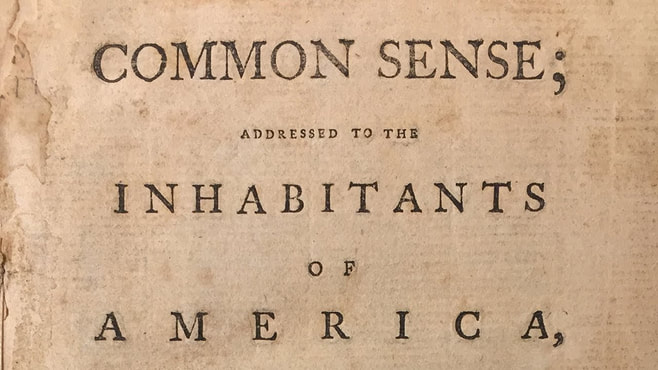
Maybe Common Sense Is Not Dead

6/4/2020

 
Business Finance | 3 Min read
Common Sense PPP Loan Revisions
Common Sense Changes TO PPP Loan Program Are Coming

Bi-Partisanship Is Not Dead Yet

In a stunning display of bi-partisanship, the Senate approved the House's  Bill yesterday for a PPP Loan Program revision, called the Paycheck Protection Flexibility Act, which provides more flexibility to business and should ease businesses' burdens and concerns about utilizing the program. The Bill will now go to President Donald Trump, who is expected to sign it.

The revisions represent common sense fixes to a well intentioned business relief program that has been over burdened by confusion and recently underutilized by the very businesses it was intended to help through the crisis.

Summary Of PPP Loan Program Revisions

​The Journal of Accountancy provides and excellent summary of the revisions compiled by AICPA:

  • Current PPP borrowers can choose to extend the eight-week period to 24 weeks, or they can keep the original eight-week period. New PPP borrowers will have a 24-week covered period, but the covered period can’t extend beyond Dec. 31, 2020. This flexibility is designed to make it easier for more borrowers to reach full, or almost full, forgiveness.
​
  • Under the language in the House bill, the payroll expenditure requirement drops to 60% from 75% but is now a cliff, meaning that borrowers must spend at least 60% on payroll or none of the loan will be forgiven. Currently, a borrower is required to reduce the amount eligible for forgiveness if less than 75% of eligible funds are used for payroll costs, but forgiveness isn’t eliminated if the 75% threshold isn’t met.  Rep. Chip Roy (Texas), who co-sponsored the bill in the House, said in a House speech that the bill intended the sliding scale to remain in effect at 60%. Senators Marco Rubio and Susan Collins indicated that technical tweaks could be made to the bill to restore the sliding scale.
​
  • Borrowers can use the 24-week period to restore their workforce levels and wages to the pre-pandemic levels required for full forgiveness. This must be done by Dec. 31, a change from the previous deadline of June 30.
​
  • The legislation includes two new exceptions allowing borrowers to achieve full PPP loan forgiveness even if they don’t fully restore their workforce. Previous guidance already allowed borrowers to exclude from those calculations employees who turned down good faith offers to be rehired at the same hours and wages as before the pandemic. The new bill allows borrowers to adjust because they could not find qualified employees or were unable to restore business operations to Feb. 15, 2020, levels due to COVID-19 related operating restrictions.
​
  • Borrowers now have five years to repay the loan instead of two. The interest rate remains at 1%.
​
  • The bill allows businesses that took a PPP loan to also delay payment of their payroll taxes, which was prohibited under the CARES Act.

PPP Loan Program Background

The PPP Loan Program  launched in early April with $349 billion in funding. I previously commented on the the initial demand exhausting available funds in less than two weeks as well Congress provided an additional $310 billion in funding in an April 21 vote. I also wrote about waning demand from business due to concerns about obtaining of loan forgiveness under the program’s rules advising our clients to wait and see how Congress addressed the uncertainty.    

When dealing with the government, especially in this current atmosphere of dysfunction, a wait and see approach sometimes pays off.  The current revisions from a common sense bi-partisan bill might actually fulfill the original intent of hte PPP Loan Program and help many struggling businesses survive the current crisis and keep paying their employees.  A little hope is something we could all use right now. 
0 Comments
Read More


Leave a Reply.

Are You Ready to

Find Your Clarity
​
Contact Us
Privacy Policy
Cookies policy
Terms of Use
Disclaimers
​
​
© 2013 - 2025 Critical Mission Consulting LLC
All Rights reserved